

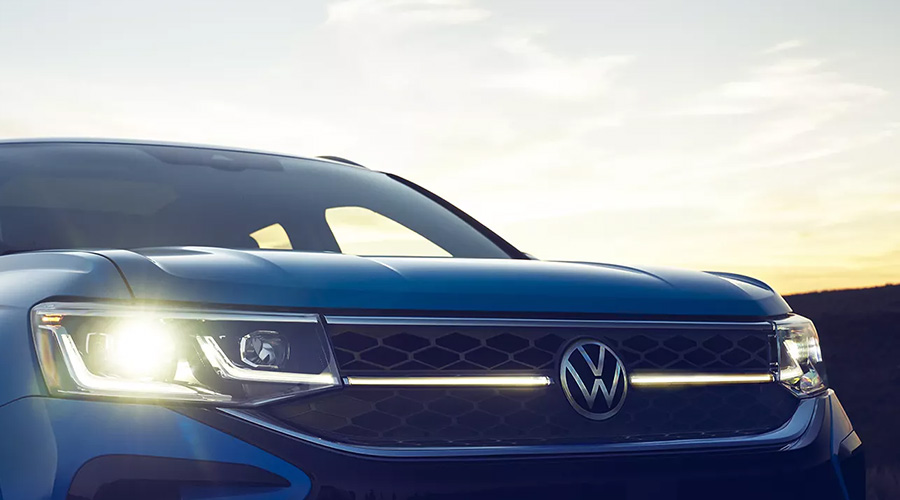
Volkswagen design is not expressive in the way people expect. It doesn’t announce itself immediately. It doesn’t rely on visual drama or exaggerated proportion to create interest. In fact, if you look at most Volkswagen products briefly, you could argue they are almost restrained to a fault. But stay with them longer, and something else becomes clear. They are resolved.
That’s the difference.
The Philosophy Behind VW Design
Volkswagen doesn’t approach design as surface treatment. It approaches it as a system. Every line must justify its existence. Not emotionally, but structurally. A crease isn’t there to create tension for its own sake. It’s there because it aligns with something else. The surface isn’t curved simply to catch light. It’s curved because it transitions into another surface that requires it.
This is why Volkswagen vehicles tend to age well. They’re not chasing visual trends. They’re built around proportion, alignment, and clarity. You can see this in something like the Jetta. Nothing about it is overstated. But the relationship between the greenhouse, the beltline, and the lower body is balanced in a way that feels intentional rather than decorative.
The Atlas does something similar, just at a different scale. Larger volumes, more presence, but still controlled. It doesn’t rely on visual noise to communicate size. It uses proportion.
How VW Design Shapes the Driving Experience
Design, in Volkswagen’s case, extends directly into how the vehicle is used. The interior is not arranged to impress at first glance. It’s arranged to reduce cognitive load over time.
Controls are placed where they can be reached without searching. Interfaces are simplified so they can be understood quickly. Even the seating position is part of this thinking. Visibility, reach, posture. These are design decisions, not just engineering ones.
In the Tiguan or ID.4, this becomes obvious after a few minutes of driving. You stop interacting with the vehicle as an object and start using it as an extension of routine. That’s not accidental. That’s the goal.
Ambient lighting, material selection, screen placement, all of it is secondary to clarity.
Iconic Models That Reflect the Approach
Volkswagen’s lineup doesn’t rely on a single design statement. It applies the same principles across different use cases.
The ID.4 represents a shift in platform and propulsion, but the design language remains consistent. Clean surfaces, controlled detailing, and an emphasis on usability over ornamentation. It looks modern, but not temporary.
The Atlas focuses on space and presence, but again, avoids excess. It communicates size through proportion rather than aggression.
The Jetta continues as a reference point for how Volkswagen handles sedans. Understated, but carefully proportioned. Nothing feels added without reason.
Across all of them, the throughline is discipline.
Experience Volkswagen Design Now
Volkswagen design doesn’t try to impress in a single moment. It builds appreciation over time, through consistency and clarity. At Everett Volkswagen of Rogers, that philosophy is evident across the lineup. Vehicles that prioritize proportion, usability, and long-term coherence over short-term impact.
Connect with us

